Table Of Content
- Through the blooms of a magnolia tree
- The Official 2024 White House Christmas Ornament
- This LEGO Icons Wildflower Bouquet Set is 20% off, and it makes the perfect Mother's Day Gift
- How the White House Rose Garden Became the Most Famous Garden in the World
- Lyndon B. Johnson press conference in the Rose Garden
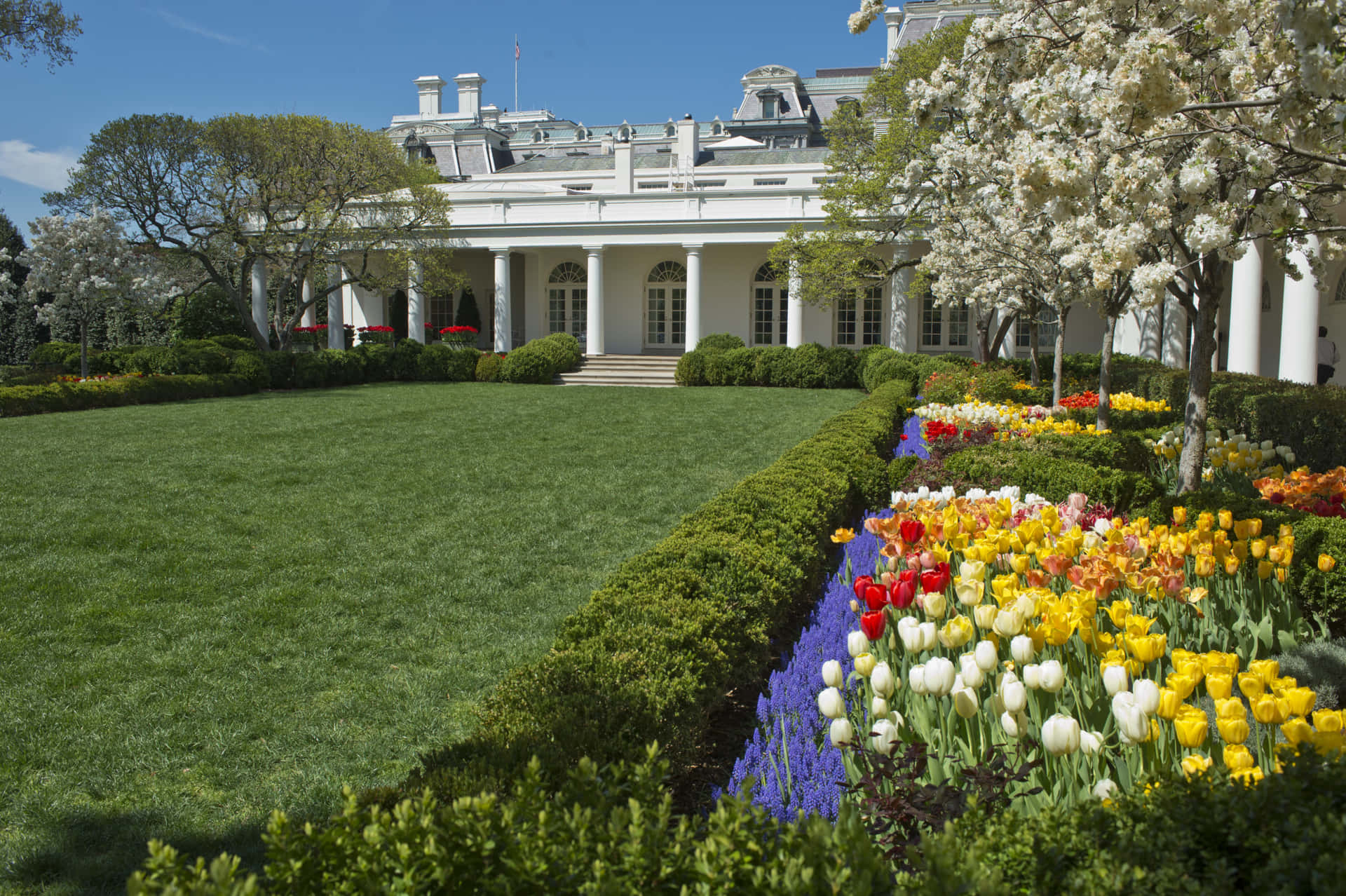
In 1961, under the direction of First Lady Jacqueline Kennedy, amateur gardener Rachel Lambert "Bunny" Mellon was asked to designed the current garden, which led to what is known today as the Kennedy Rose Garden, adjacent to the Oval Office and Cabinet Room. Other Rose Garden inhabitants have come and gone over the years too, including the boxwood hedges, which have been replaced as many as four times, most recently a few weeks ago. Ironically, “roses have a tough time surviving in that garden,” Holden explains, citing the heat and humidity of Washington, D.C., as well as the site’s lack of air circulation, thanks to the West Wing’s embrace. Irvin M. Williams, who worked as the White House head gardener from 1962 until his retirement in 2008, once told her that such challenges had turned the site into a show garden by the 1980s. Some roses were planted in the ground, while others were set on the ground in pots that were concealed beneath surrounding foliage and then transported to a greenhouse at the National Park Service’s Kenilworth Park & Aquarium after the flowering was finished.
Through the blooms of a magnolia tree

The images prompted some people on social media to express passionate opinions about the garden's appearance. Some claimed Trump had "ruined" what amounted to a national legacy, and others expressed that they liked the new look. In 1966, as a Christmas gift, Jackie Kennedy gave Bunny an oversizescrapbook commemorating her work on the Rose Garden with photographs,letters, dried flowers, and humorous and touching commentary incalligraphy-style handwriting. The photos ranged from candid familysnapshots of the president playing with his children in the floweringgarden to grave images of the president solemnly walking through theplot with Defense Secretary Robert McNamara during the missile crisis.
The Official 2024 White House Christmas Ornament
Her designs blended European inspiration with wholly American sensibility for a garden that represented the very kind of diplomacy to which it would act as a backdrop. In 1902, First Lady Edith Roosevelt founded a colonial garden on the site of what would later become the official White House Rose Garden 11 years later, in 1913, thanks to First Lady Ellen Louise Axson Wilson. You wouldn’t know from looking at it now, but this plot of land was once used for horse stables. Discover how America's most famous garden has been at the center of major political and social events for nearly 120 years.
This LEGO Icons Wildflower Bouquet Set is 20% off, and it makes the perfect Mother's Day Gift
He wanted to start, in the greatest haste, to remake the area near his office at the west end of the White House, known as the Rose Garden, into an area both useful and attractive. He and Mrs. Kennedy had just returned from a state visit to France, followed by stops in England and Austria. The President had noted that the White House had no garden equal in quality or attractiveness to the gardens that he had seen and in which he had been entertained in Europe. There he had recognized the importance of gardens surrounding an official residence and their appeal to the sensibilities of all people. Soo covered the COVID-19 pandemic from 2020 to 2022, including interviews with chief medical advisor to the president, Dr. Anthony Fauci. Soo has reported on various major events, including the Black Lives Matter movement, the U.S. and Canadian elections, and the 2020 Tokyo Olympics.
White House Rose Garden History - Melania Trump's Changes to the Rose Garden - Town & Country
White House Rose Garden History - Melania Trump's Changes to the Rose Garden.
Posted: Sun, 23 Aug 2020 07:00:00 GMT [source]
How the White House Rose Garden Became the Most Famous Garden in the World
Even though she could now imagine thepossibilities, the prospect of moving forward was daunting. PerryWheeler agreed to help, but this was a project that would require theresources of the National Park Service. Bunny was initially baffled by the prospect of creating a visuallyelegant stage set, using trees, flowers, and hedges to serve as abackdrop for state occasions. She brought Perry Wheeler, the landscapearchitect favored by Georgetown society, along on her first visit to thegarden, and the two of them sat on a white bench under Andrew Jackson’smagnolia tree. As they mulled the possibilities, the president steppedout of the Oval Office.
President Kennedy made frequent use of the new Rose Garden for a variety of functions. The president had specified there were to be functional steps that could also serve as a stage at the west end of the garden near the Oval Office. In this photo, Kennedy addresses Boys Nation, a young men’s civic group, at a Rose Garden ceremony on July 24, 1963.
English Breakfast Robust with flavor, this traditional blend of organic black tea brews smooth and malty, with a clean finish. Huntington Rose Blend Inspired by Arabella Huntington’s most beloved flowers, this blend’s floral essence and smooth finish delight the senses. In Washington, DC, the mansion has been home to every US president since John Adams in 1800. Over in California, there is a replica of the famed building, known as the Western White House, which is The National's International Property of the Week.
White House Rose Garden Over 60 Years—Pictures From 1961 to 2021
The Rose Garden or West Garden area was first created in 1903 as a colonial-style garden by First Lady Edith Roosevelt, at the same time she created a similar garden design in the East Garden known today as the Jacqueline Kennedy Garden. First Lady Ellen Wilson with the assistance of George Burnap created the first Rose Garden at this location in 1913. Prior to the removal of the large conservatories atop the West Terrace and the greenhouse complex in 1902, a greenhouse known as the Rose House was located in this area. Jasmine Blueberry This organic white tip green tea is infused with jasmine petals and succulent organic blueberries. Earl Grey Crème Laced with zesty bergamot and French vanilla, this organic high-grown estate black tea has a velvety creamy finish.
U.S. First Ladies: Making History and Leaving Legacies
In this Aug. 11, 2009 photo we see National Park Service Gardener Kevin Tennyson at work on the border garden with President Barack Obama in the background. The long borders that flank the Rose Garden are 12 feet wide each with five Katherine crab apple trees that mark a center point for each section. The crab apples were chosen for their compatibility with roses as well as other perennials, annuals, and plantings that grow at their base. In Bunny Mellon’s original plans, Santolina (a form of chamomile) is planted into a diamond shape surrounding each tree surrounded by a clipped boxwood hedge.
Irwin Williams, who was head gardener of Washington's Kenilworth Aquatic Gardens at the time, became The White House's chief gardener and tended to its signature rose varieties, including Queen Elizabeth, Pascali, Pat Nixon, and King's Ransom, for nearly 50 years. The plans also called for a platform on the west end of the garden, near the Oval Office, and a flagstone terrace on the east end to serve as a place where the president could relax and entertain guests or host small luncheons. On January 24, 1962, Bunny sent watercolor sketches of her plan for theRose Garden, along with detailed renderings, to the president. Shesigned her name “Rachel Lambert Mellon,” as if to underline herprofessional commitment. Her streamlined design eliminated the existinghedges and opened up the space to allow for as many as 1,000 people touse the garden. With magnolia trees anchoring the corners, the lawnwould be framed—as if it were a picture—with borders of trees andflowers.
Architecture buffs such as Eric Groft of Oehme, van Sweden are delighted to see the colonnade, designed by Benjamin Latrobe and Thomas Jefferson, so fully visible now, but the crab apples’ disappearing act remains perplexing. President Johnson is seen at the podium from above in this photo, speaking to reporters on April 23, 1964. The gardens are in full spring bloom, and five crab apple trees run along the garden's borders. The gardens are designed to change with the seasons, and be flexible to adapt to the tastes of the president, with a mix of annuals and perennials. People shared their opinion about the renovation on social media, alongside images showing the garden before and after the renovation.
Immediately outside the properties there is some open, but private, space, but most of the garden is shared. To do this, they remodeled the properties and combined their backyards into an approximately 10,800-square-foot split-level garden, which they named for Jones Wood, the forested expanse that spanned 65th to 76th streets until it was developed in the late 1800s, Ephemeral New York reported. Unlike that famously gated Manhattan greenspace farther downtown, however, Jones Wood Garden cannot be ogled from the street — only neighboring residents can look upon, let alone roam, this pocket of nature enclosed within the buildings that line Lexington and Third avenues. 66th St., asking $10.75 million, comes with a basement sauna, approximately 3,620 square feet of living space, a roof deck and access to a lush oasis that could give Gramercy Park a run for its reputation — if only anyone knew it existed. Caramelized Pear A fruity and flavorful blend with notes of honey, caramel, and freshly baked pear. Pacific Coast Mint This refreshing organic blend of spearmint and peppermint is harvested from the coasts of Oregon and California.
Green Pomegranate Blended with tart raspberries and essence of pomegranate, this zesty organic green tea is light and refreshing. A tribute to the White House, the Neoclassical Georgian colonial-style house was built in 1915 and redesigned in 1930 by Julia Morgan, the first woman admitted to the Beaux-Arts de Paris architecture programme. It was a commission by the Hearst family, for whom she designed the famed Hearst Castle in San Simeon, California. At 1600 Pennsylvania Avenue, the White House has one of the most famous addresses in the world.
It all began at a summer picnic at Mellon's Cape Cod beach house that included President and Mrs. Kennedy as guests, according to an interview Mellon conducted for the White House Historical Association. "Hardly had the President came ashore from his boat when he suggested we sit down and discuss a garden for the White House," she recalled in the interview. In the years following, the garden grounds of the White House continued to bloom, with the planting of various flowers as well as ornamental and commemorative trees.


No comments:
Post a Comment